Dear
Brethren and Friends,
Benjamin Franklin, though an evil man, never slandered the Jews as the Nazis and
neo-Nazis claim today.
The book
They Never Said It
proves the claim.
Sincerely in faith,
Brother Eric
Amazon.com: They Never Said It: A Book of Fake Quotes, Misquotes ...
Many of the misquotes are quite harmless. Some are inadvertent
misquotes that ... the forged remarks attributed to Benjamin
Franklin that Jews should be ...
www.amazon.com/They-Never-Said-Misleading-Attributions/dp/0195064690
- 253k -
Cached
They
Never Said It: A Book of Fake Quotes,
Misquotes,
and ... - Google Books Result
|
by Paul F. Boller, John H. George - 1989 - Literary Criticism - 159
pages |
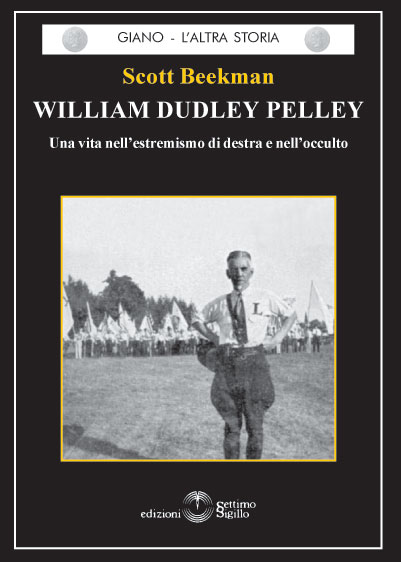
The Franklin quote [sic] apparently first turned up on February 3, 1934, in William Dudley Pelley's pro-Nazi sheet, Liberation, published in Asheville, North Carolina. According to Pelley, it was taken from notes made by Charles Cotesworh Pinckney, delegate to the Constitutional Convention from South Carolina, between sessions of the convention, and it was entitled "Chit-Chats Around the Table During Intermission." But there is no Pinckney diary, and historian Charles Beard, after a thorough investigation of the "Franklin Prophecy," concluded: "This alleged 'Prophecy' ascribed to Franklin is a crude forgery, and his name should be cleared of the crass prejudice attributed to him. There is in our historical records no evidence whatever of any basis for the falsehood."
Like Washington and Jefferson, Franklin was utterly devoid of religious intolerance and prejudice, and he had the friendliest feelings toward citizens of the Jewish faith. On one occasion, when the Hebrew Society of Philadelphia sought to raise money for a synagogue, Franklin signed the petition appealing to "citizens of every denomination" for contributions. Nevertheless, during the 1930s and 1940s, the Franklin forgery was cited time and again in the Nazi press in Germany, broadcast over the Nazi radio, and incorporated into the Nazi bible, Handbuch der Judenfrage, by Theodor Fritsch. It was popular, too, in neo-Nazi circles in the United States.
Who Were the Founding Fathers?: Two Hundred Years
of Reinventing ... - Google Books Result
|
by Steven H. Jaffe - 1996 - Juvenile Nonfiction - 227 pages |
Liberation was published by William Dudley Pelley, leader of the Silver Shirts of America. The magazine asserted that Pinckney had recorded in his diary a speech by Benjamin Franklin at the Convention in which Franklin attacked Jews. According to Liberation, Franklin had warned his fellow delegates that if they did not write a clause into the Constitution prohibiting Jews from entering the United States, "in less than 200 years they will have swarmed in such great numbers that they will dominate and devour the land and change our form of government.... I warn you, gentlemen, if you do not exclude Jews for all time, your children will curse you in your graves." The Convention, of course, had not written such a prohibition into the Constitution, and Pelley declared that American was now paying the price for not listening to Franklin.
The magazine article was soon printed enthusiastically by propaganda sheets in Nazi Germany and by other right-wing periodicals in the United States. Meanwhile, historians took a long and hard look at Pelley's evidence [sic]. The alleged diary had never been seen by anybody but Silver Shirts, and no other record of such a speech by Franklin existed; soon it became apparent that the "diary" had been invented by modern anti-Semites [sic]. The language attributed to Franklin didn't even make sense. At one point in his "speech," Franklin condemned Jews for being "Asiatics" -- a modern racist idea that had not even existed in Franklin's day. Prominent Franklin scholars such as Carl Van Doren and Julian Boyd publicly blasted the entry as a modern forgery. "Not a word have I discovered in Franklin's letters and papers expressing such sentiments against the Jews as are ascribed to him by the Nazis -- American and German," noted Charles A. Beard. When Jewish Philadelphians tried to raise money to build a synagogue, Franklin had not only signed their petition appealing for contributions but had also donated five pounds of his own money, as he often did when religious groups needed funds to erect houses of worship. Rather than being able to prove that Franklin had hated Jews, the Silver Shirts ended up discrediting themselves as forgers while their "proof" disappeared into thin air.